
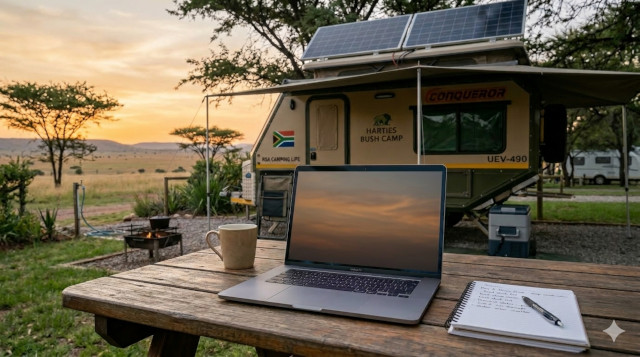
Mobile living starter guide for South Africa
This pack forms your Nomad Anchor System.
Scenario – Banking Without an Address:
- Problem: Bank requires proof of address
- Solution: Virtual office + affidavit
- Outcome: Account approved
Three components:
- Institutional communication
- Address strategy
- Documentation templates
Mobile living is becoming more common in South Africa as people look for flexible housing and travel options. The Nomad Starter Pack guide explains the essential knowledge needed before beginning a nomadic camping lifestyle.
Many new nomads focus on equipment first, but the foundation of mobile living is planning and organisation. This guide outlines the key areas every beginner should understand before starting life on the road.
Understanding the Nomad Lifestyle
Mobile living can take several forms depending on travel frequency and living arrangements. Some people travel continuously, while others remain at a campsite for several months before moving.
Long-term camping is often used as an alternative housing model. In South Africa this can involve seasonal camping, farm camping, caravan parks, or informal campsite communities.
Nomadic living requires practical planning because many normal services are no longer easily accessible. Water supply, electricity, internet connectivity, and waste management all need to be organised independently.
Choosing a Mobile Living Setup
The type of vehicle or accommodation system determines much of the lifestyle. Most South African nomads use caravans, camper trailers, or vehicles fitted with rooftop tents.
Caravans provide more storage and comfort for long stays. They are commonly used by retirees and long-term campers who move between campsites every few weeks or months.
Vehicle-based setups offer greater mobility and access to remote areas. However, storage space is limited and daily living systems must be compact.
The decision between caravan living and vehicle camping should consider fuel costs, campsite access, and maintenance requirements.
Essential Equipment for Mobile Living
A basic nomad setup requires reliable systems for shelter, cooking, water, and electricity. These systems form the operational foundation of a mobile lifestyle.
Shelter usually includes a caravan tent, rooftop tent, or standalone camping tent. Many long-term campers also use shade structures to manage heat during summer.
Cooking systems typically include a gas stove or portable gas cooker. Gas cylinders remain the most reliable cooking fuel for mobile living in South Africa.
Water storage containers are essential because many campsites have limited supply points. Portable tanks, collapsible containers, and filtration systems are often used.
Power systems are increasingly based on solar panels and battery storage. Solar power allows campers to run lighting, charge electronics, and power small appliances.
Planning Routes and Destinations
Nomadic travel requires planning that considers weather, campsite availability, and regional infrastructure. South Africa’s climate varies significantly between regions and seasons.
Winter is often spent in warmer coastal areas or low-lying regions. Summer travel frequently moves toward higher altitudes or cooler inland areas.
Route planning should also consider fuel stations, vehicle services, and medical facilities. Travellers who move between rural areas must ensure they remain within reasonable distance of support services.
A travel notebook or digital planning system helps track destinations and seasonal movements. Some nomads map their travel across the country on a yearly rotation.
Safety and Emergency Preparedness
Safety planning is a critical part of mobile living. A nomad must be able to handle small emergencies without immediate access to urban services.
Every mobile living setup should include a first aid kit, emergency tools, and spare vehicle equipment. Basic repair tools are necessary for caravan or vehicle maintenance.
Weather awareness is also important for long-term campers. Wind storms, heavy rain, and extreme heat can affect campsite safety and equipment durability.
Emergency contact plans should be established before travelling into remote areas. Mobile phone coverage is not consistent across all regions of South Africa.
Staying Connected on the Road
Internet connectivity has become essential for many nomads, especially those working remotely. Mobile networks are the primary communication method in most camping areas.
Many travellers carry SIM cards from more than one network provider. Network coverage varies between regions, and switching networks improves reliability.
Signal boosters and external antennas can improve connectivity in remote areas. These systems are commonly used by long-term campers who rely on stable internet access.
Online communication also helps travellers remain connected with nomad communities. Social groups and forums often share campsite information and travel advice.
Budgeting for a Nomad Lifestyle
Living on the road requires careful financial planning. Although camping can reduce housing costs, several operational expenses remain.
Fuel is often the largest variable cost for travelling nomads. Frequent movement increases travel expenses significantly.
Campsite fees vary widely depending on location and facilities. Farm camps and smaller sites often provide more affordable long-term rates than commercial caravan parks.
Maintenance costs must also be considered. Vehicles, caravans, and camping equipment require ongoing servicing and repairs.
Many nomads maintain a contingency fund for unexpected repairs or medical needs. This financial reserve helps manage risks associated with mobile living.
Building a Nomad Community
Long-term camping often develops into a social lifestyle. Many nomads form informal networks that share campsite recommendations and travel experiences.
Camping communities can provide valuable local knowledge about routes, weather conditions, and services. These networks often operate through online groups and campsite gatherings.
Community connections also help new nomads adjust to mobile living. Experienced travellers often share practical advice with beginners entering the lifestyle.
Over time, many nomads develop regular travel routes and meet familiar travellers at seasonal destinations.
Conclusion
Mobile living in South Africa requires preparation, planning, and reliable systems. A successful nomad lifestyle depends on understanding equipment needs, travel planning, and safety considerations.
The Nomad Starter Pack guide introduces the fundamental knowledge required before starting life on the road. As the NomadBase website grows, this guide will connect to more detailed resources, tools, and planning systems for long-term campers and travelling nomads.